Explain the cross bridging theory for muscle contraction and elaborate on the Force length and Force velocity relationship of muscle actions and muscle fibres. Use appropriate animations and graphics.

Cross bridge theory

The cross-bridge theory of muscle contraction states how force is produced, and how the filaments actin and myosin are moved relative to each other to produce muscle shortening. In the cross-bridge theory, sidepieces that are fixed in a regular pattern on the myosin filament (cross-bridges) are thought to undergo cyclic attachment and detachment to specific binding sites on the actin filament. During an attachment/detachment cycle, the cross-bridge head is thought to undergo a rotation and so pull the actin filament relative to the myosin. Each of these cycles is associated with a relative movement of ∼10 nm and a force of about 2–10 pN. Furthermore, one cross-bridge cycle is thought to occur with the energy gained from the hydrolysis of one adenosine triphosphate (ATP).

The cross bridge theory explains the mechanism of muscle contraction based on muscle proteins that slide past each other to generate movement. According to this theory, the myosin (thick) filaments of muscle fibers slide past the actin (thin) filaments during muscle contraction, while the two groups of filaments remain at relatively constant length.

It was independently introduced in 1954 by two research teams, one consisting of Andrew F. Huxley and Rolf Niedergerke from the University of Cambridge, and the other consisting of Hugh Huxley and Jean Hanson from the Massachusetts Institute of Technology. It was originally conceived by Hugh Huxley in 1953. Andrew Huxley and Niedergerke introduced it as a “very attractive” hypothesis.

Force-Length Relationship

Due to the presence of titin, muscles are innately elastic. Skeletal muscles are attached to bones via tendons that maintain the muscle under a constant level of stretch called the resting length. If this attachment was removed, for example if the bicep was detached from the scapula or radius, the muscle would shorten in length.
This line graph depicts the relationship between tension and length in the sarcomere.The Ideal Length of a Sarcomere: Sarcomeres produce maximal tension when thick and thin filaments overlap between about 80 percent to 120 percent, approximately 1.6 to 2.6 micrometers.
Muscles exist in this state to optimize the force produced during contraction, which is modulated by the interlaced myofilaments of the sarcomere. When a sarcomere contracts, myosin heads attach to actin to form cross-bridges. Then, the thin filaments slide over the thick filaments as the heads pull the actin. This results in sarcomere shortening, creating the tension of the muscle contraction. If a sarcomere is stretched too far, there will be insufficient overlap of the myofilaments and the less force will be produced. If the muscle is over-contracted, the potential for further contraction is reduced, which in turn reduces the amount of force produced.
Simply put, the tension generated in skeletal muscle is a function of the magnitude of overlap between actin and myosin myofilaments.
In mammals, there is a strong overlap between the optimum and actual resting length of sarcomeres.

Force-Velocity relationship

Force-Velocity Relationship: As velocity increases force and therefore power produced is reduced. Although force increases due to stretching with no velocity, zero power is produced. Maximum power is generated at one-third of maximum shortening velocity.
The force-velocity relationship in muscle relates the speed at which a muscle changes length with the force of this contraction and the resultant power output (force x velocity = power). The force generated by a muscle depends on the number of actin and myosin cross-bridges formed; a larger number of cross-bridges results in a larger amount of force. However, cross-bridge formation is not immediate, so if myofilaments slide over each other at a faster rate the ability to form cross bridges and resultant force are both reduced.
At maximum velocity no cross-bridges can form, so no force is generated, resulting in the production of zero power (right edge of graph). The reverse is true for stretching of muscle. Although the force of the muscle is increased, there is no velocity of contraction and zero power is generated (left edge of graph). Maximum power is generated at approximately one-third of maximum shortening velocity.

Muscle contraction velocity

Skeletal muscle contractions can be broadly separated into twitch and tetanic contractions. In a twitch contraction, a short burst of stimulation causes the muscle to contract, but the duration is so brief that the muscle begins relaxing before reaching peak force. If another contraction occurs before complete relaxation of a muscle twitch, then the next twitch will simply sum onto the previous twitch, a phenomenon called summation. If the stimulation is long enough, the muscle reaches peak force and plateaus at this level, resulting in a tetanic contraction.

References:

https://en.wikipedia.org/wiki/Sliding_filament_theory

Classification of biosensors based on the transducers and the key differences between them.

Biosensors

What is a Biosensor?

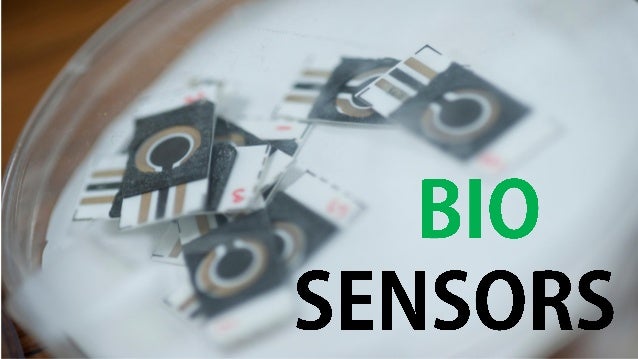
Biosensors can be defined as analytical devices which include a combination of biological detecting elements like a sensor system and a transducer. When we compare with any other presently existing diagnostic device, these sensors are advanced in the conditions of selectivity as well as sensitivity. The applications of these Biosensors mainly include checking ecological pollution control, in the agriculture field as well as food industries. The main features of biosensors are stability, cost, sensitivity, and reproducibility.

The short form of the biological sensor is known as a biosensor. In this sensor, a biological element is maybe an enzyme, a nucleic acid otherwise an antibody. The bio-element communicates through the analyte being checked & the biological reply can be changed into an electrical signal using the transducer. Based on the application, biosensors are classified into different types like resonant mirrors, immune, chemical canaries, optrodes, bio-computers, glucometers & biochips.

Biosensors - an overview | ScienceDirect Topics

Classification of biosensors

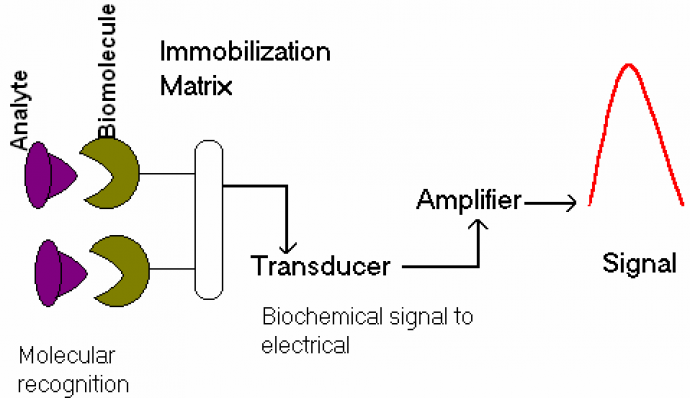
Conventionally, biosensors consist of a biological recognition element, generally called the bioreceptor, the transducer component, and the electronic system (often combined with the transducer). Biosensors can be classified in terms of the bioreceptor or transducer type used. Bioreceptors are the key tools for the biosensor technology; they are the biological molecular species that exploit the biochemical mechanism for the recognition. Bioreceptors allow the binding of analytes of interest to produce a signal measurable by the transducer . Depending on the bioreceptor type used, biosensors can broadly be classified into four classes: nucleic acid/DNA , enzymes , antibody–antigen , and cells . On the basis of the transducer type being used, biosensors may be designated as optical, thermal, piezoelectric, quartz crystal microbalance (QCM), and electrochemical. Additionally, the electrochemical biosensor can further be categorized as conductometric, amperometric, and potentiometric . There are two broad biosensor categories based on the biorecognition principle: (i) catalytic biosensor, typical of enzyme biosensors and (ii) affinity biosensor, typical of DNA, and antibodies. Therefore, a biosensor with electrochemical transduction method and enzymes as a bioreceptor can be called an enzyme biosensor (based on the bioreceptor) or catalytic biosensor (based on the biorecognition principle). Based on both bioreceptor and transducer, they are also known as enzyme-based electrochemical biosensors. Enzyme biosensors can also be categorized based on specific enzymes used as bioreceptor (glucose biosensor, urea biosensor, cholesterol biosensor, etc.). Other biosensors can also be named as DNA biosensor (DNA as bioreceptor) and immunosensor (antibody as bioreceptor).

Classifications of biosensor.  

Classification based on transducers

Based on the transduction mechanism, biosensors are majorly classified into:
• Optical sensors
• Electrochemical sensors
• Mass-sensitive sensors

Optical sensors

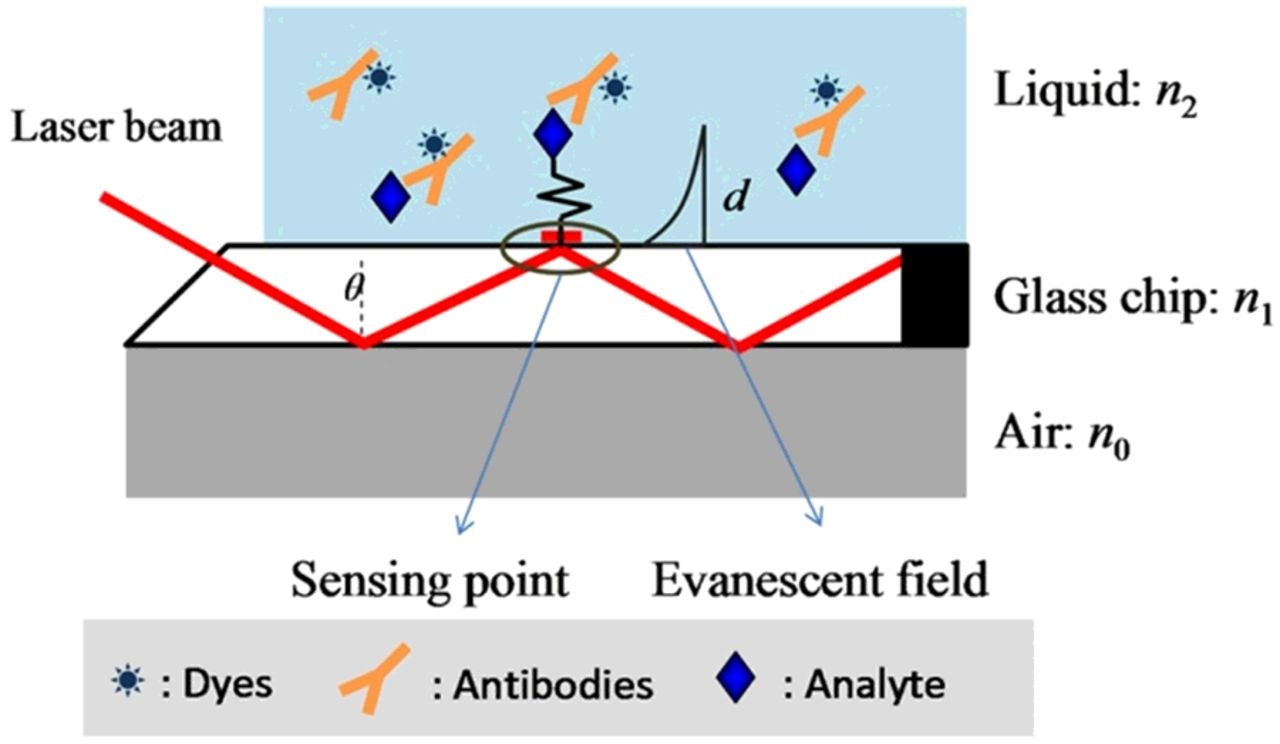
An optical sensor converts light rays into electronic signals. It measures the physical quantity of light and then translates it into a form that is readable by an instrument. An optical sensor is generally part of a larger system that integrates a source of light, a measuring device and the optical sensor.

Working of optical biosensor
These types of biosensors are based on measuring the changes in the intensity of light and convert light signal into an electrical signal that can be recorded in the form of current or potential. Optical biosensors have gained considerable interest for bacterial pathogen detection due to their sensitivity and selectivity. The most commonly used technique of optical detection is surface plasmon resonance (SPR) for pathogen detection

Electrochemical sensors

 Based on the reaction of enzymatic catalysis thatconsumes or generates electrons- Redox Enzymes..The object analyte is engaged in the response thathappens on the surface of an active electrode, and thisreaction may source also electron-transfer across thedual layer potential. The current can be calculated at a set potential. Based on the chosen function of a specific electrode,the electrode material and surface modification influences detection ability. Electrochemical sensing requires a reference electrode, a counter or auxiliary electrode and a working electrode (sensing electrode). Reference electrode (Ag/AgCl) kept at a distance from the reaction site to maintain a known and stable potential. The working electrode serves as the transduction element in the biochemical reaction, while the counter electrode establishes a connection to the electrolytic solution so that a current can be applied to the working electrode.

Mass-sensitive sensors

Piezoelectric biosensors are considered as mass based biosensors. They produce an electrical signal when a mechanical force is applied. Most common is the quartz crystal
microbalance (QCM). Specific nucleotides are immobilized on the surface of the crystal and are inserted into a solution containing the target nucleic acid. Upon interaction between the target nuclei and its complementary nucleotides, there is an increase in the mass of the piezoelectric biosensor This decreases the resonant frequency of the crystal Real time, low cost, fast response Lack of sensitivity and selectivity

Calorimetric sensors 

There are various types of biological reactions which are connected with the
invention of heat, and this makes the base of thermometric biosensors. These sensors are usually named as thermal biosensors. Thermometric-biosensor is used to
measure or estimate the serum cholesterol. As cholesterol gets oxidized through the enzyme cholesterol oxidase, then the heat will be produced which can be calculated.
Similarly, assessments of glucose, urea, uric acid, and penicillin G can be done with these biosensors.

Calorimetric Sensor for Ethanol Using Ni2+-nitrilotriacetic Acid (NTA)  Resin Immobilized Alcohol Dehydrogenase (ADH),Current Analytical Chemistry  - X-MOL

References:

http://www.idc-online.com/technical_references/pdfs/chemical_engineering/Classification_of_biosensors_based_on_transducers.pdf

http://www.acs.chtf.stuba.sk/papers/acs_0117.pdf

https://www.electronicshub.org/types-of-biosensors/

https://en.wikipedia.org/wiki/Biosensor

http://www.idc-online.com/technical_references/pdfs/chemical_engineering/Types_of_biosensors.pdf

https://www.researchgate.net/figure/Classifications-of-biosensor_fig2_40684756

Classification of biosensors based on the transducers, and highlight the key differences between them.

Biosensors

DEFINITION
Self-contained integrated device that is capable of providing specific
qualitative or semi-quantitative analyti...

Biosensors are devices used to detect the presence or concentration of a biological analyte, such as a biomolecule, a biological structure or a microorganism. Biosensors consist of three parts: a component that recognizes the analyte and produces a signal, a signal transducer, and a reader device.

Classification of Biosensors

Conventionally, biosensors consist of a biological recognition element, generally called the bioreceptor, the transducer component, and the electronic system (often combined with the transducer). Biosensors can be classified in terms of the bioreceptor or transducer type used. Bioreceptors are the key tools for the biosensor technology; they are the biological molecular species that exploit the biochemical mechanism for the recognition. Bioreceptors allow the binding of analytes of interest to produce a signal measurable by the transducer . Depending on the bioreceptor type used, biosensors can broadly be classified into four classes: nucleic acid/DNA , enzymes , antibody–antigen , and cells . On the basis of the transducer type being used, biosensors may be designated as optical, thermal, piezoelectric, quartz crystal microbalance (QCM), and electrochemical. Additionally, the electrochemical biosensor can further be categorized as conductometric, amperometric, and potentiometric . There are two broad biosensor categories based on the biorecognition principle: (i) catalytic biosensor, typical of enzyme biosensors and (ii) affinity biosensor, typical of DNA, and antibodies. Therefore, a biosensor with electrochemical transduction method and enzymes as a bioreceptor can be called an enzyme biosensor (based on the bioreceptor) or catalytic biosensor (based on the biorecognition principle). Based on both bioreceptor and transducer, they are also known as enzyme-based electrochemical biosensors. Enzyme biosensors can also be categorized based on specific enzymes used as bioreceptor (glucose biosensor, urea biosensor, cholesterol biosensor, etc.). Other biosensors can also be named as DNA biosensor (DNA as bioreceptor) and immunosensor (antibody as bioreceptor).

What are Biosensors? Principle, Working, Types and Applications


Classification based on transducers

Based on the transduction mechanism, biosensors are majorly classified into:
• Optical sensors
• Electrochemical sensors
• Mass-sensitive sensors
• Calorimetric sensors

Optical Sensor

An optical sensor converts light rays into an electronic signal. The purpose of an optical sensor is to measure a physical quantity of light and, depending on the type of sensor, then translates it into a form that is readable by an integrated measuring device. Optical Sensors are used for contact-less detection, counting or positioning of parts. Optical sensors can be either internal or external. External sensors gather and transmit a required quantity of light, while internal sensors are most often used to measure the bends and other small changes in direction.

The measurands possible by different optical sensors are Temperature, Velocity Liquid level, Pressure, Displacement (position), Vibrations, Chemical species, Force radiation, pH- value, Strain, Acoustic field and Electric field

Optical Biosensor

Electrochemical Biosensor

Generally, the electrochemical biosensor is based on the reaction of enzymatic catalysis that consumes or generates electrons. Such types of enzymes are named Redox Enzymes. The substrate of this biosensor generally includes three electrodes such as a counter, reference, and working type.

figure1

Introduce Yourself (Example Post)

This is an example post, originally published as part of Blogging University. Enroll in one of our ten programs, and start your blog right.

You’re going to publish a post today. Don’t worry about how your blog looks. Don’t worry if you haven’t given it a name yet, or you’re feeling overwhelmed. Just click the “New Post” button, and tell us why you’re here.

Why do this?

  • Because it gives new readers context. What are you about? Why should they read your blog?
  • Because it will help you focus your own ideas about your blog and what you’d like to do with it.

The post can be short or long, a personal intro to your life or a bloggy mission statement, a manifesto for the future or a simple outline of your the types of things you hope to publish.

To help you get started, here are a few questions:

  • Why are you blogging publicly, rather than keeping a personal journal?
  • What topics do you think you’ll write about?
  • Who would you love to connect with via your blog?
  • If you blog successfully throughout the next year, what would you hope to have accomplished?

You’re not locked into any of this; one of the wonderful things about blogs is how they constantly evolve as we learn, grow, and interact with one another — but it’s good to know where and why you started, and articulating your goals may just give you a few other post ideas.

Can’t think how to get started? Just write the first thing that pops into your head. Anne Lamott, author of a book on writing we love, says that you need to give yourself permission to write a “crappy first draft”. Anne makes a great point — just start writing, and worry about editing it later.

When you’re ready to publish, give your post three to five tags that describe your blog’s focus — writing, photography, fiction, parenting, food, cars, movies, sports, whatever. These tags will help others who care about your topics find you in the Reader. Make sure one of the tags is “zerotohero,” so other new bloggers can find you, too.

Introduce Yourself (Example Post)

This is an example post, originally published as part of Blogging University. Enroll in one of our ten programs, and start your blog right.

You’re going to publish a post today. Don’t worry about how your blog looks. Don’t worry if you haven’t given it a name yet, or you’re feeling overwhelmed. Just click the “New Post” button, and tell us why you’re here.

Why do this?

  • Because it gives new readers context. What are you about? Why should they read your blog?
  • Because it will help you focus your own ideas about your blog and what you’d like to do with it.

The post can be short or long, a personal intro to your life or a bloggy mission statement, a manifesto for the future or a simple outline of your the types of things you hope to publish.

To help you get started, here are a few questions:

  • Why are you blogging publicly, rather than keeping a personal journal?
  • What topics do you think you’ll write about?
  • Who would you love to connect with via your blog?
  • If you blog successfully throughout the next year, what would you hope to have accomplished?

You’re not locked into any of this; one of the wonderful things about blogs is how they constantly evolve as we learn, grow, and interact with one another — but it’s good to know where and why you started, and articulating your goals may just give you a few other post ideas.

Can’t think how to get started? Just write the first thing that pops into your head. Anne Lamott, author of a book on writing we love, says that you need to give yourself permission to write a “crappy first draft”. Anne makes a great point — just start writing, and worry about editing it later.

When you’re ready to publish, give your post three to five tags that describe your blog’s focus — writing, photography, fiction, parenting, food, cars, movies, sports, whatever. These tags will help others who care about your topics find you in the Reader. Make sure one of the tags is “zerotohero,” so other new bloggers can find you, too.

Introduce Yourself (Example Post)

This is an example post, originally published as part of Blogging University. Enroll in one of our ten programs, and start your blog right.

You’re going to publish a post today. Don’t worry about how your blog looks. Don’t worry if you haven’t given it a name yet, or you’re feeling overwhelmed. Just click the “New Post” button, and tell us why you’re here.

Why do this?

  • Because it gives new readers context. What are you about? Why should they read your blog?
  • Because it will help you focus your own ideas about your blog and what you’d like to do with it.

The post can be short or long, a personal intro to your life or a bloggy mission statement, a manifesto for the future or a simple outline of your the types of things you hope to publish.

To help you get started, here are a few questions:

  • Why are you blogging publicly, rather than keeping a personal journal?
  • What topics do you think you’ll write about?
  • Who would you love to connect with via your blog?
  • If you blog successfully throughout the next year, what would you hope to have accomplished?

You’re not locked into any of this; one of the wonderful things about blogs is how they constantly evolve as we learn, grow, and interact with one another — but it’s good to know where and why you started, and articulating your goals may just give you a few other post ideas.

Can’t think how to get started? Just write the first thing that pops into your head. Anne Lamott, author of a book on writing we love, says that you need to give yourself permission to write a “crappy first draft”. Anne makes a great point — just start writing, and worry about editing it later.

When you’re ready to publish, give your post three to five tags that describe your blog’s focus — writing, photography, fiction, parenting, food, cars, movies, sports, whatever. These tags will help others who care about your topics find you in the Reader. Make sure one of the tags is “zerotohero,” so other new bloggers can find you, too.

Design a site like this with WordPress.com
Get started