Biosensors
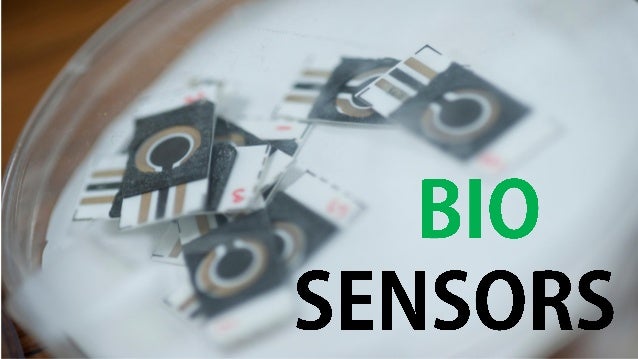
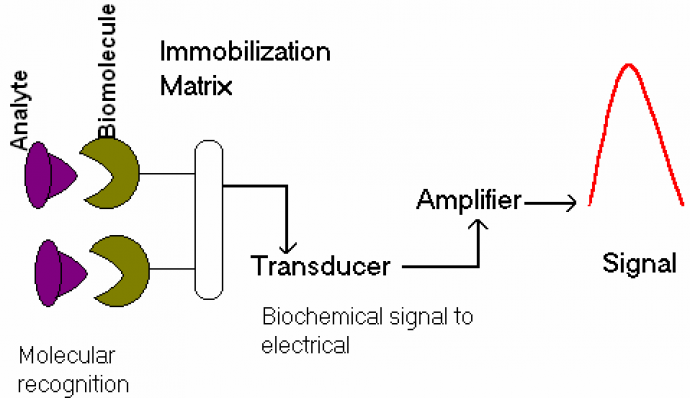
Biosensors are devices used to detect the presence or concentration of a biological analyte, such as a biomolecule, a biological structure or a microorganism. Biosensors consist of three parts: a component that recognizes the analyte and produces a signal, a signal transducer, and a reader device.

Classification of Biosensors
Conventionally, biosensors consist of a biological recognition element, generally called the bioreceptor, the transducer component, and the electronic system (often combined with the transducer). Biosensors can be classified in terms of the bioreceptor or transducer type used. Bioreceptors are the key tools for the biosensor technology; they are the biological molecular species that exploit the biochemical mechanism for the recognition. Bioreceptors allow the binding of analytes of interest to produce a signal measurable by the transducer . Depending on the bioreceptor type used, biosensors can broadly be classified into four classes: nucleic acid/DNA , enzymes , antibody–antigen , and cells . On the basis of the transducer type being used, biosensors may be designated as optical, thermal, piezoelectric, quartz crystal microbalance (QCM), and electrochemical. Additionally, the electrochemical biosensor can further be categorized as conductometric, amperometric, and potentiometric . There are two broad biosensor categories based on the biorecognition principle: (i) catalytic biosensor, typical of enzyme biosensors and (ii) affinity biosensor, typical of DNA, and antibodies. Therefore, a biosensor with electrochemical transduction method and enzymes as a bioreceptor can be called an enzyme biosensor (based on the bioreceptor) or catalytic biosensor (based on the biorecognition principle). Based on both bioreceptor and transducer, they are also known as enzyme-based electrochemical biosensors. Enzyme biosensors can also be categorized based on specific enzymes used as bioreceptor (glucose biosensor, urea biosensor, cholesterol biosensor, etc.). Other biosensors can also be named as DNA biosensor (DNA as bioreceptor) and immunosensor (antibody as bioreceptor).

Classification based on transducers
Based on the transduction mechanism, biosensors are majorly classified into:
• Optical sensors
• Electrochemical sensors
• Mass-sensitive sensors
• Calorimetric sensors
Optical Sensor
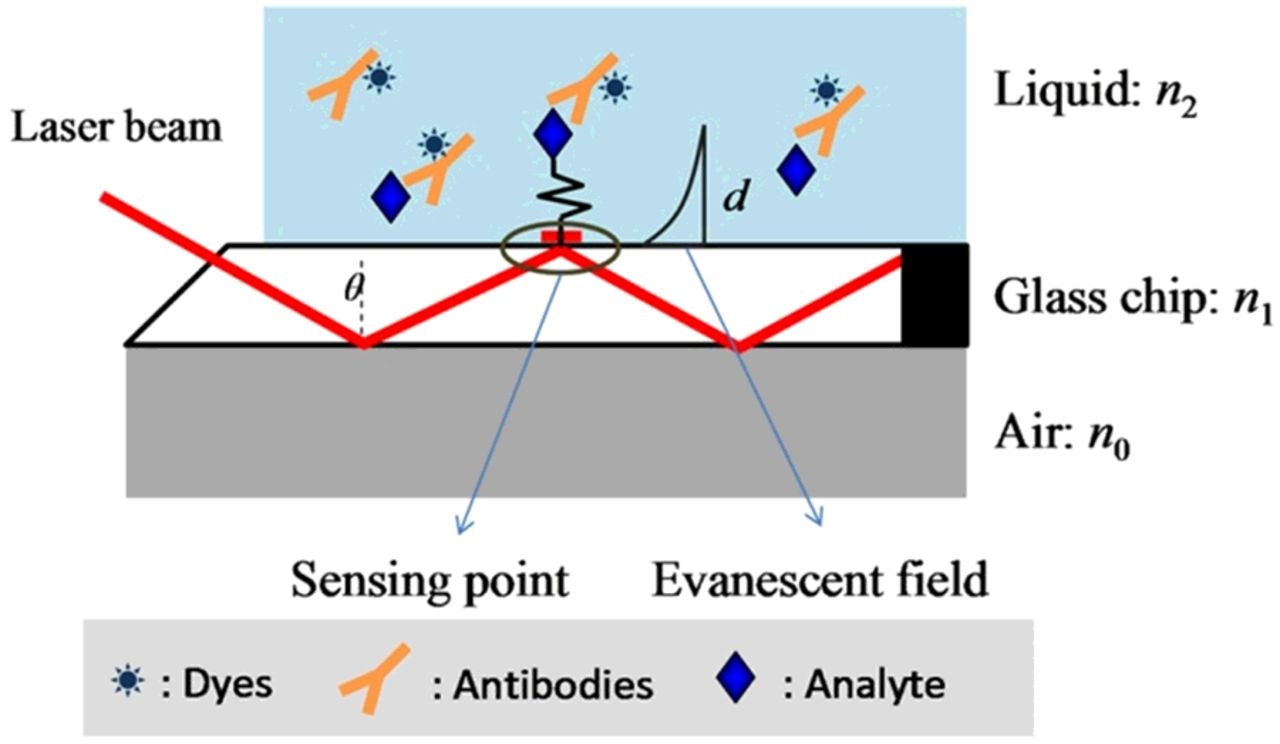
An optical sensor converts light rays into an electronic signal. The purpose of an optical sensor is to measure a physical quantity of light and, depending on the type of sensor, then translates it into a form that is readable by an integrated measuring device. Optical Sensors are used for contact-less detection, counting or positioning of parts. Optical sensors can be either internal or external. External sensors gather and transmit a required quantity of light, while internal sensors are most often used to measure the bends and other small changes in direction.
The measurands possible by different optical sensors are Temperature, Velocity Liquid level, Pressure, Displacement (position), Vibrations, Chemical species, Force radiation, pH- value, Strain, Acoustic field and Electric field
Electrochemical Biosensor
Generally, the electrochemical biosensor is based on the reaction of enzymatic catalysis that consumes or generates electrons. Such types of enzymes are named Redox Enzymes. The substrate of this biosensor generally includes three electrodes such as a counter, reference, and working type.

 BIOLOGY 4 ENGEENERS